 Say it once
 Who it's for
 GEO for Shopify

Most Shopify SEO apps only audit and hand you a to-do list. Here is which app actually writes the fix, verifies it before publishing, and re-measures it, plus an honest map of which SEO issues can be auto-applied and which still belong to a technical-SEO tool.
Updated Oct 2026Naridon is now an AI marketing team that starts with a call with the founders; this post was written for the earlier self-serve Shopify app and its Naridon details are updated.
TL;DR: Most Shopify SEO apps only audit. They scan, score, and hand you a to-do list. A much smaller group actually write the fix. Naridon, now a team rather than an app, fixes the content and structured-data layer of SEO: product and collection copy, meta content through generated copy, Product and Offer schema, FAQ schema, JSON-LD, and llms.txt. It verifies each fix with an LLM, waits for your yes, writes it through the Shopify Catalog API, and re-measures your visibility across ChatGPT, Perplexity, Google AI Overviews, Gemini, and Copilot. It does not auto-fix redirects, broken links, or sitemaps; those belong to a dedicated technical-SEO app.
Search for a “Shopify app that automatically fixes SEO” and almost everything that comes back is an auditor. It crawls your store, assigns a score, flags missing meta descriptions and thin product copy and absent schema, and then it stops. The actual work, rewriting the copy, adding the structured data, publishing the fix, lands back on you or your developer. The word “fix” in the app listing usually means “we will show you what to fix”, not “we will fix it”.
This guide draws the line clearly. It separates audit-only SEO tools from apps that write the fix, it is honest about which SEO issues can be auto-applied and which still need a human or a specialist tool, and it explains why fixing the content and schema layer is the part that pays off twice, once for classic search and once for AI answers. This is a focused companion to the pillar guide on Shopify apps that automatically apply fixes.
Audit vs Fix: The Distinction Most Listings Blur
Every SEO app for Shopify falls into one of three honest tiers. Knowing the tier tells you exactly how much work is left after you install it.
Tier 1: Audit Only (Scan and Report)
These apps produce a report: a list of missing titles, thin descriptions, absent Product schema, orphaned pages, and broken links. The list is genuinely useful for understanding where you stand. What these apps do not do is change anything. You, an agency, or a developer implement each item by hand. Most Shopify SEO apps live here, and if a tool connects by URL or crawl rather than installing natively, it almost certainly cannot write to your store at all.
Tier 2: Fix (Writes the Change)
A smaller group of apps write changes back: populating meta fields, injecting Product schema, bulk-editing attributes, rewriting copy. This is real writeback and it removes the manual step. The common limitation is that many of these apps apply changes without a verification pass, so a generated fix can go live unchecked, and most optimize for classic search only, with no feedback on whether the change helped anything.
Tier 3: Fix and Verify (Detect, Generate, Verify, Apply, Track)
This is the category almost nobody occupies, and it is where Naridon sits for the content and schema layer. A fix-and-verify app runs a closed loop: it detects the gap, generates the fix, checks the fix with an LLM before publishing, writes it to the live catalog, keeps it revertible, and then re-measures your visibility to confirm the change moved the needle. Applying without verifying is risky. Applying without tracking is guesswork. Doing the whole loop is the point.
The Honest Part: Two Layers of SEO, and Only One Auto-Writes Cleanly
Here is the distinction that saves you from disappointment. Shopify SEO is not one thing; it is two layers, and they are fixed by different kinds of tools.
- The content and structured-data layer. This is product and collection copy, meta content through generated copy, Product and Offer schema, FAQ schema, JSON-LD, and llms.txt. It is text and machine-readable markup, which means an app can generate it, verify it, and write it. This is exactly what Naridon's team fixes for you.
- The classic technical layer. This is 301 redirects, broken and dead links, XML sitemaps, canonical conflicts, and crawl errors. Fixing these safely often means touching routing, theme, and site infrastructure, which is the domain of a dedicated technical-SEO app. Naridon does not auto-fix redirects, broken links, or sitemaps, and pretending otherwise would be dishonest.
Why does Naridon lead with the content and schema layer rather than the technical one? Because that layer pays off twice. The same clean Product and Offer schema, FAQ schema, and product copy that earns classic search rich results is also what generative engines read before they cite a store in an answer. Fix it once and it works for Google rich results and for AI answers together. The technical layer matters, but it mostly protects crawlability; it rarely drives whether ChatGPT or Google AI Overviews actually name your product. For the full method, see the complete guide to GEO for Shopify, and for the definition of the AI-visibility side, our glossary entry on Generative Engine Optimization.
Which SEO Issue Gets Fixed by Whom
AI Overviews cite tables, so here is the map by SEO issue type: who owns the fix, and whether it can be auto-applied. Note the last row, where the honest answer is “not Naridon”.
| SEO issue type | Who fixes it | Can it be auto-applied? |
|---|---|---|
| Titles, meta, descriptions | Naridon Autopilot (meta content via generated copy) | Yes, generated, verified, then written |
| Product and collection copy | Naridon Autopilot | Yes, rewritten and verified before publish |
| Product and Offer schema | Naridon Autopilot (its strongest fix) | Yes, written as valid JSON-LD |
| FAQ schema | Naridon Autopilot | Yes, FAQs plus FAQPage markup |
| llms.txt | Naridon Autopilot | Yes, published for AI crawlers |
| Redirects, broken links, XML sitemaps | Dedicated technical-SEO app (not Naridon) | Yes, but by a different category of tool |
The pattern is clear. Naridon's Autopilot owns the content and structured-data rows end to end, in a single verified loop, and is candid that the classic technical row belongs to a specialist tool. A good SEO stack often runs both: a technical-SEO app for redirects and sitemaps, and Naridon for the content and schema layer that drives rich results and AI citations.
How Naridon Actually Writes the Fix, Step by Step
Naridon works on your store's own data through the Shopify Catalog API. The team runs the same closed loop for every fix:
- Detect. Autopilot scans your catalog and your visibility across five AI engines to find specific gaps: missing Product schema, thin or generic copy, an unanswered buyer question, a product absent from AI answers.
- Generate. It drafts the fix: rewritten meta and product copy, JSON-LD, Product and Offer schema, an FAQ block with FAQ schema, an llms.txt entry, whatever the gap calls for.
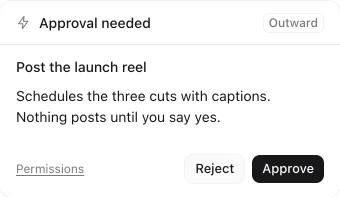
- Verify. Before anything publishes, an LLM checks the generated fix for accuracy and quality. This pre-publish verification is the step most auto-fix tools skip, and it is what keeps automatic changes trustworthy on a live store.
- Apply. The approved change is written to your live catalog through the Shopify Catalog API.
- Track and revert. Naridon re-measures your visibility to confirm the fix helped, and every change can be reverted if it did not.
Talking to the team is free; credits pay only for the work itself, at its real cost. For the underlying writeback mechanism, see how Naridon applies changes to your Shopify catalog directly.
What Naridon Auto-Fixes for SEO, and What It Does Not
Being precise here matters, because over-claiming is how tools lose trust. Naridon's Autopilot automatically fixes:
- Meta content through generated copy so titles and descriptions read for buyers and engines instead of being blank or duplicated.
- Product and collection copy rewritten to answer the questions shoppers actually ask.
- Product and Offer schema written as valid JSON-LD so search and AI can parse products, offers, availability, and brand.
- FAQ schema that matches how shoppers phrase questions, which feeds both rich results and AI answers.
- llms.txt published so AI crawlers get a clean, structured map of what your store sells.
What Naridon does not auto-fix: redirects, broken links, and XML sitemaps. Those are the classic technical items, and they belong to a dedicated technical-SEO app. Naridon also does not retouch image pixels or generate alt text as a core feature. Its lane is the content and structured-data layer that makes your store legible to search and AI at the same time. If you want the schema side in depth, see the sibling guide on the Shopify app that automatically fixes schema, and for the AI-answer side, the guide on the app that automatically fixes AI visibility.
How to Tell an SEO Fixer from an SEO Auditor
Before you trust any app with write access to your live store, ask these five questions:
- Can it write to your store? URL or crawl connections cannot. Write access to your catalog is the prerequisite for applying anything.
- What exactly does it write? Look for meta content, product and collection copy, Product and Offer schema, FAQ schema, JSON-LD, and llms.txt, not just a report with a score.
- Does it verify the fix before publishing? A pre-publish LLM check is what separates a trustworthy auto-fix from an unchecked one.
- Can every change be reverted? One-click revert is the difference between confident optimization and risky edits on a live store.
- Is it honest about its limits? An app that claims to auto-fix redirects, broken links, sitemaps, copy, and schema all at once is overstating. Clear boundaries are a trust signal, not a weakness.
For example, imagine a mid-size skincare store whose product pages have duplicated meta titles, no Product schema, and copy that never mentions the questions shoppers ask ChatGPT, such as “fragrance-free moisturizer for sensitive skin”. An audit-only app would list all three problems and stop. A fix-and-verify app rewrites the meta and copy, writes valid Product and Offer schema, adds an FAQ block with FAQ schema, verifies each one, applies them, and re-checks the same prompts a week later to see whether the store now earns a rich result and gets cited in AI answers. This is an illustrative scenario, not a reported result, but it shows why writing the fix beats reporting it. Separately, if that store also had 40 broken redirects, a technical-SEO app would handle those, not Naridon.
Where the Report-Only Tools Fit
To be fair to the category, several well-known platforms are strong at measurement. Tools like Peec.ai and Profound track how often AI engines cite your brand, which competitors win, and how your share-of-voice trends over time. That is valuable work, and if reporting is all you want, they do it well. What they do not do is write the fix into your store. They hand you the analysis and the implementation stays with you or your developer. Naridon's wedge is not that it measures, plenty of tools measure. It is that Naridon closes the loop: it applies the verified content and schema fix and then confirms it worked. If you want the one-click, no-code path specifically, see the guide on the one-click fix for Shopify SEO with no code.
Where Naridon Fits, Honestly
If you only want a dashboard that scores your store and lists what is wrong, an auditor is fine, and cheaper attention is better spent elsewhere. If you want the content and structured-data fixes actually written into your store, verified before they publish, safely revertible, and confirmed against both classic search and real AI visibility, that is a much shorter list, and it is the specific job Naridon was built for. Pair it with a technical-SEO app for redirects and sitemaps and you have the full stack covered.
Naridon starts at $1,049/mo (Starter, 12,000 credits), scaling to Growth at $1,799/mo (23,000 credits) and Enterprise at $5,099/mo (72,000 credits), with the whole team on every plan. There is no free plan or trial: book a call with the founders to start. If you only need one kind of fix, a single-purpose SEO app costs far less. Full details are on the pricing page.
The takeaway: “a Shopify app that automatically fixes SEO” is a real but narrow promise, and most listings that make it only audit. Split SEO into its two layers, be honest that redirects, broken links, and sitemaps belong to a technical-SEO app, and then look for the app that writes the layer that pays off twice: meta content, product and collection copy, Product and Offer schema, FAQ schema, and llms.txt, verified before publish and re-measured across five engines. That content and schema layer is what earns rich results in classic search and citations in AI answers at the same time, and writing it, not just flagging it, is the difference between a longer to-do list and a store that quietly fixes itself.